Impact on algae growth and chlorophyll-a
Algae are a natural part of all aquatic ecosystems; their proliferation can make both positive and negative impacts on the water.
Excess algae can lead to the formation of algal blooms.[38] Most of the bloom is composed of potentially toxic cyanobacteria, a significant threat to aquatic ecology, biota, and even humans.[38] Cyanobacterial blooms can also affect water turbidity, pH, chlorophyll-a, the trophic state of water, and stratification.[39]
Sunlight is essential for algae growth; it’s required for photosynthesis. Shading provided by FPV can reduce the proliferation of algae and improve water quality.[38]
Chlorophyll-a (chl-a) indicates phytoplankton biomass, reflecting its production in marine waters in response to nutrient and light availability.[40] Eutrophication results from over-enrichment of waters with nutrients, either from natural or man-made sources.
This can lead to hazardous algal blooms, ecosystem deterioration, biodiversity loss, and oxygen deprivation in bottom waters.[40] Several studies predict increased FPV coverage can lead to the reduction of algal growth and chl-a concentration. [41][42]
Haas et al, 2020: Predicting impacts in Chile
This study[42] investigated FPV’s impact on the Rapel hydropower reservoir in Chile, using algal bloom development as an indicator of water quality and overall oxygen budget.
Using a numerical-hydrodynamic model (ELCOM-CAEDYM), the study compared the current condition of a lake without FPV to scenarios with varying levels of FPV cover.
Results showed:
• Small FPV installations have limited success in preventing algal blooms • Moderate-sized installations can effectively avoid blooms while supporting healthy algal concentrations • Very large FPV with >60% coverage may eliminate algae entirely, posing a potential threat to the lake's ecology (whereas depending on the algae species, algae bloom is considered a negative or a positive effect)
FPV coverages of 40%-100% would reduce chlorophyll-a concentrations below 10 µg/L. According to the World Health Organization,[43] chl-a concentration between 0-10µg/L is safe recreational water.
According to this study, the recommended optimum cover % of FPV for the Rapel hydropower reservoir is between 40 to 60%, to maintain acceptable levels of algal concentration.
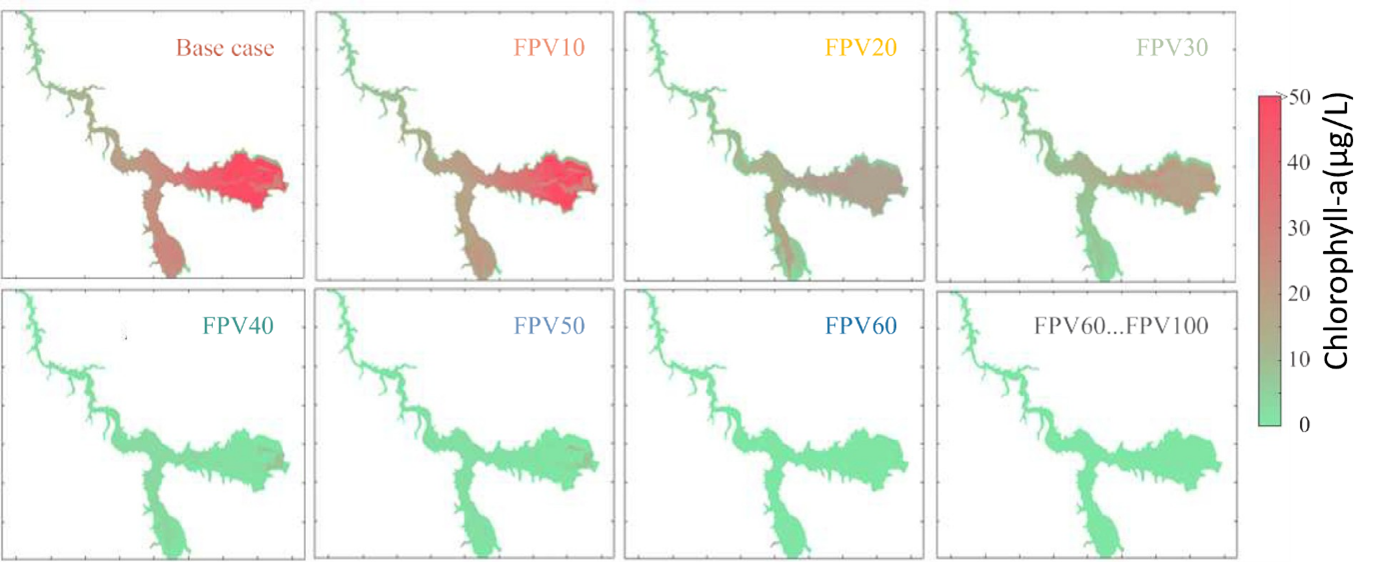
Figure 6:Chlorophyll-a concentrations on a hydropower reservoir in Chile after simulations with varying Floating-PV coverages (Floating-PV10 = 10% Floating-PV coverage, etc.)
Buro Bakker and AKTB, 2021: Drawing comparisons across the Netherlands
Two BayWa r.e. FPV plants were studied by independent ecology advisors, Buro Bakker and AKTB in 2021. Both were in the Netherlands; one at Bomhofsplas with 26% water coverage, the other in Nijbeets with 29%.
Two different locations underneath the FPV Park and open water were compared, and water quality parameters were measured. Results showed average chl-a concentrations in summer of 4.4µg/L in open water, and 6.5µg/L under FPV. Both values are considered "very good" by the Water Framework Directive.
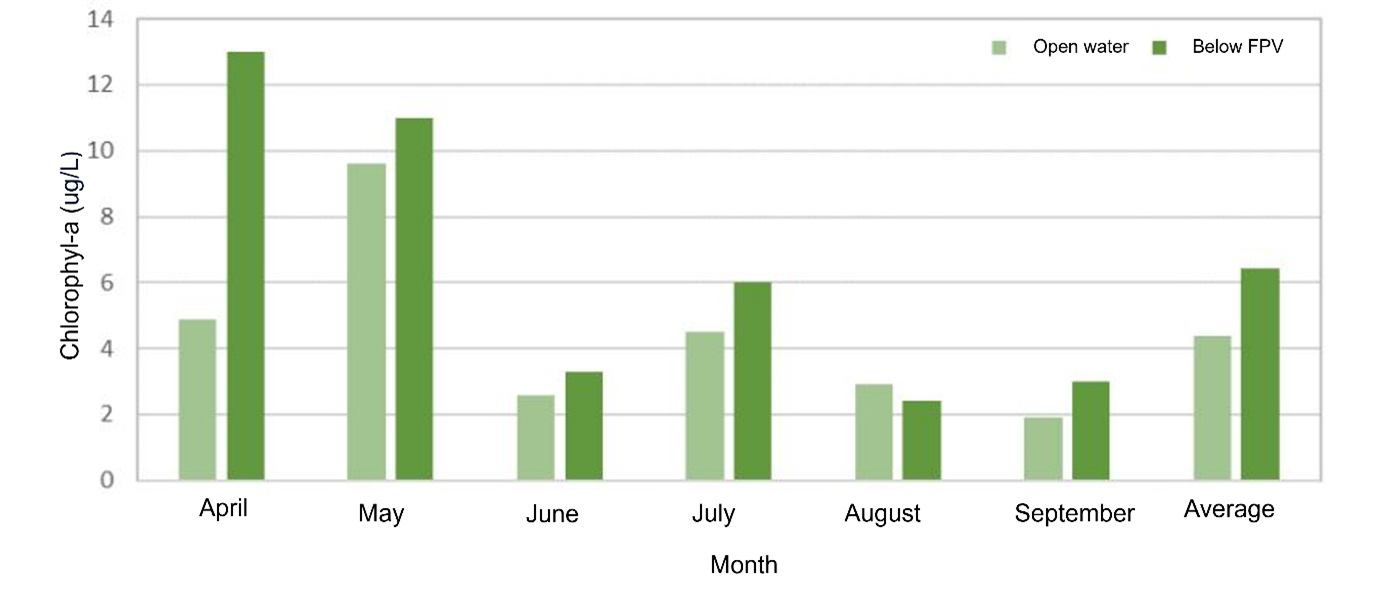
Figure 7.Chlorophyll-a concentrations measured at Bomhofsplas in open water and below solar park
Surface warming throughout spring creates a thermal layer. This may be seen in the lake from June to at least September. The thermal layer, which typically occurs at depths of 6-8m, causes temperatures above it to exceed 20°C while temperatures below stabilize around 8°C.
Oxygen content was generally lower beneath the solar farm, with average saturation levels at 90% compared to 97% at the reference location at Bomhofsplas.
Results at Nijbeets showed oxygen concentration at the water's surface ranges from 7.8-11.2mg/L with a saturation of 81-105%. Oxygen level decreases near the bottom, ranging from 1.8-7.9mg/L with saturation 16–66%. The water’s pH ranges from 7.6-8.7 at the surface and 7.6-8.0 at the bottom.
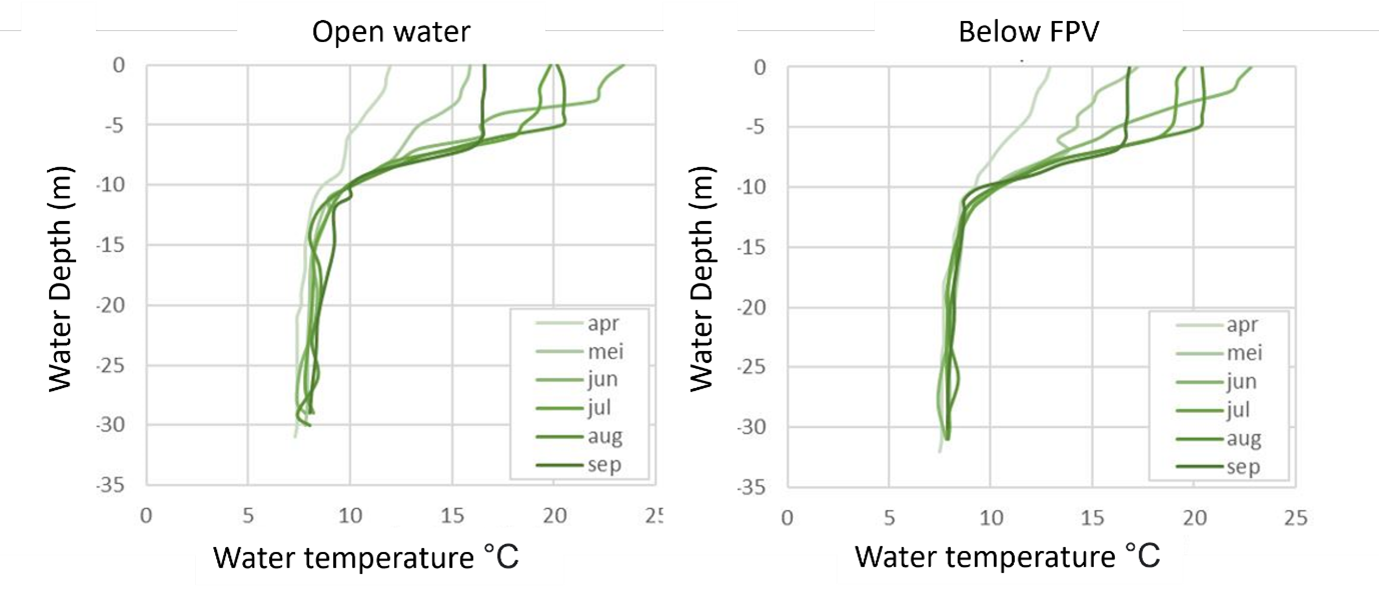
Figure 8.Water temperature in relation with water depth at Bomhofsplas