Impact on water quality
During the development and operation of FPV projects, it’s essential to maintain water quality. Measuring this is a question of monitoring parameters like: • Water stratification • Water temperature • Dissolved oxygen (DO) • Electrical conductivity (EC) • Turbidity
Water stratification
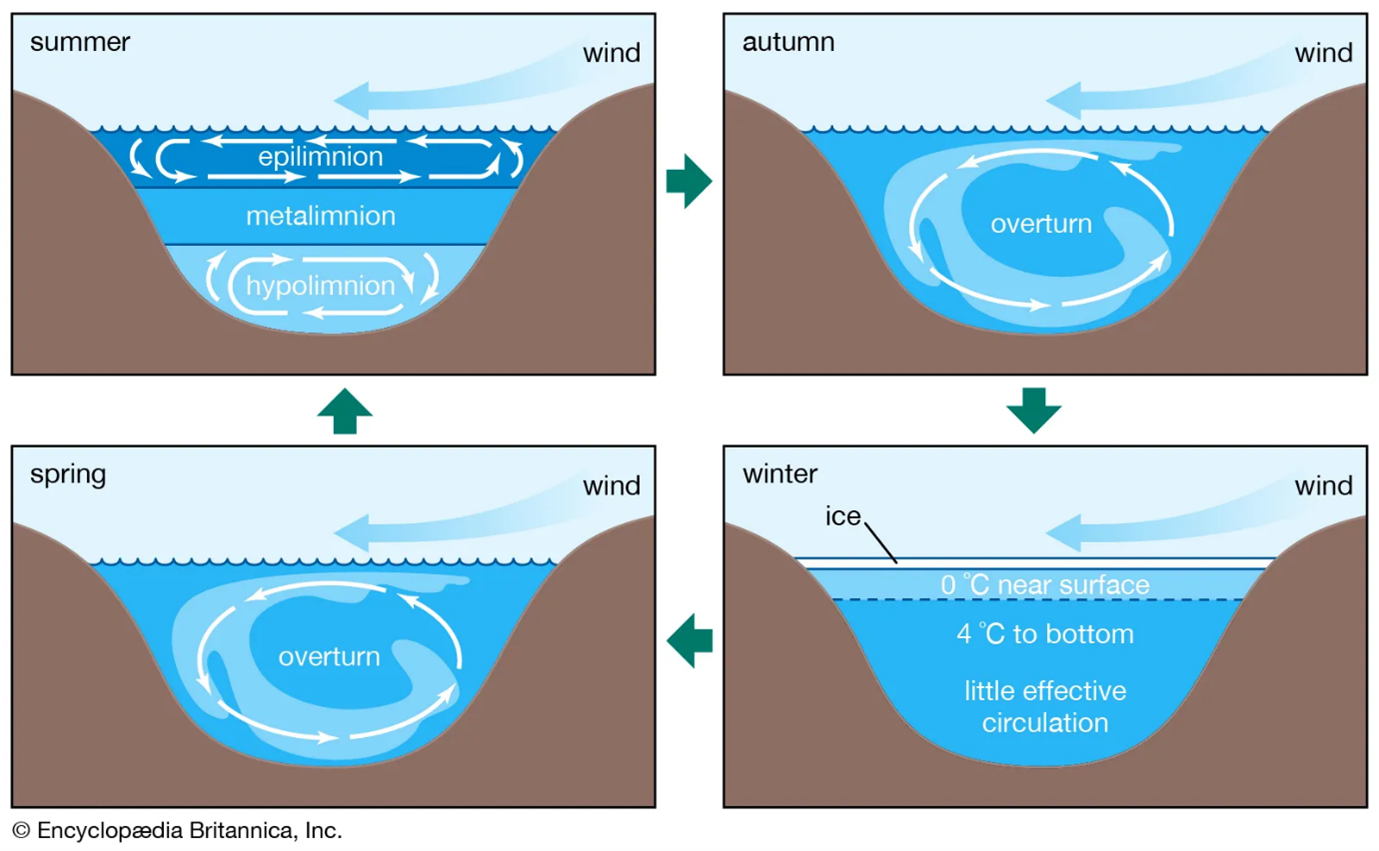
Lakes exhibit vertical stratification over time. Thermal stratification occurs during the warm season in lakes with sufficient depth. This is due to the large differences in density (weight) between warm and cold water.[12]
In summer, the water surface is warmer. Temperature differences increase between surface and deeper water.[13] This creates a cycle in which warm water at the surface floats above the cool water below, while surface water heats as it receives energy from the sun and becomes even less dense compared to the cool water below, creating different layers of water in the lake:[13] • The upper layer of well-mixed water zone is called the epilimnion • The second layer, the metalimnion, functions as a barrier that hinders mixing and the transfer of heat between epilimnion and the deeper strate • This deeper layer, the hypolimnion, is composed of cold water that isn't mixed with the above layers and has poor circulation[14]
Climate change is extending the stratification period in lakes,[15] increasing the duration between spring and fall mixing. As the time between mixing is getting longer, oxygen concentrations in the deep waters of lakes are declining. This has potential harmful consequences for habitats in deep water.[16]
When FPV covers a water body, it reduces the amount of solar radiation reaching the surface. This shields it from the effects of wind mixing,[10] altering water temperature and stratification.[17] Wind speed and solar radiation typically have opposite effects on the thermal structure of water bodies. Decreases in wind speed tend to increase stratification and surface heating. Decreases in solar radiation tend to increase the mixing and cooling of surface waters.[18]
Stratification determines a variety of biological, chemical, and physical processes within lakes. These involve population dynamics and interactions between species. This in turn affects the exchange of oxygen, nutrients, and carbon between the lake's surface and bottom.[19]
A study by Exley et al[20] investigated the potential impact of FPV on an English lake, using a modelling approach. The lake has a surface area of 670ha, a maximum depth of 42m, and an average depth of 16.8m. This makes it significantly larger than the sand pit lakes widely used in Europe for FPV projects. The effects on lake water quality were investigated at cover levels ranging from 0 to 100%.
The study argues that plant-induced changes in the main meteorological parameters of global radiation and wind speed have opposite effects on temperature balance and circulation behavior. For example, increasing the area of a FPV plant reduces global radiation, resulting in a decrease in water temperature.
At the same time, decreasing wind speed causes an increase in temperature, resulting in at least partial compensation. The results showed reduction in water temperature, shorter stratification period, and shallower mixed depth. However, in low FPV cover scenarios, stratification duration was prolonged.
Another study by Ilgen et al[21] investigates how FPV systems affect a lake's thermal dynamics. Specifically, thermal stratification, energy budget, and water temperature were examined. The research is being conducted on a FPV facility with a 749Wp capacity, on lake Maiwald in Germany, which is 70m deep. Wind speed and irradiance beneath the FPV facility significantly decreased, by 23% and 73% respectively vs baseline measurements.
Researchers used the General Lake Model to mimic different FPV occupancies and changing climate conditions using a three-month dataset. Results suggest that, during the summer, FPV coverage results in shorter and less stable thermal stratification. This may have a mitigating influence on the expected heating effect from climate change.
Water temperature
One of the key physical characteristics of lakes is their water temperature. Water temperature is critical for fish population development, reproduction, and immune system maintenance.[22] Variation of water temperature impacts the rates of biological and chemical processes, as well as the level of lake eutrophication.[23]
When water temperature increases, many aquatic organisms' metabolic rates increase rapidly. High water temperatures hinder the process of vertical mixing in lakes. This impacts the dissolved oxygen and essential nutrient levels in the lake, as well as the food chain.[25]
As temperature rises, oxygen and other gases become less soluble, warmer water may not contain enough oxygen to support life.[26] Low temperatures, meanwhile, may restrict metabolic performance by disrupting the equilibrium between oxygen supply and demand.[24]
Dissolved oxygen
Dissolved oxygen (DO) refers to the amount of oxygen in aquatic environments available to fish, invertebrates, and other organisms in the water.[27] Most aquatic plants and animals rely on oxygen.[27] For example, fish can’t endure extended periods in water with less than 4 mg/L of DO.[28]
Low dissolved oxygen concentration in water may be an indication of pollution. It’s a key factor in the assessment of water quality, pollution control, and treatment processes.[29] DO concentration can be impacted by seasonal changes of water temperature.[30] Throughout summer stratification, the top layer of the lake warms. DO levels increase due to oxygen transfer from the air and algal photosynthesis. Water temperature and DO decrease the deeper you go.[30]
Electrical conductivity
Electrical conductivity in lakes is a valuable parameter for assessing water quality, understanding ecological dynamics, and managing freshwater resources.[31] It indicates both salinity and pollutants directly, as well as the number of contaminants in the water.
Water conductivity ranges between water types; lakes and streams usually have a conductivity range of 0-200µS/cm.[26] Large variations in conductivity may indicate a pollution source in the aquatic environment.[33]
Turbidity
The turbidity of a lake describes water clarity, or whether sunlight can penetrate deeper parts of the lake. Turbidity often varies seasonally, both with the discharge of rivers and growth of phytoplankton (algae and cyanobacteria).[34]
Dredging often leads to high turbidity due to high amounts of dissolved sediments. The sunlight that plants require to produce oxygen for fish and other aquatic life may be blocked.[34] Furthermore, an excessive amount of silt or other particles suspended in the water absorb solar heat. This causes the water to warm and further reduces the amount of dissolved oxygen.
Live studies of FPV projects
These studies look at the impact of FPV on the kind of parameters we’ve explored so far.
De Lima et al, 2021: Underwater exploration at Bomhofsplas
• Location: Bomhofsplas Lake, a sand extraction pit in Zwolle, Netherlands • Size: 70ha • FPV lake coverage: 26% • Installed capacity: 27.4MWp
This 10-month study[35] took measurements using underwater drones and sensors. This happened at varying depths and two locations; under the FPV plant and in open water.
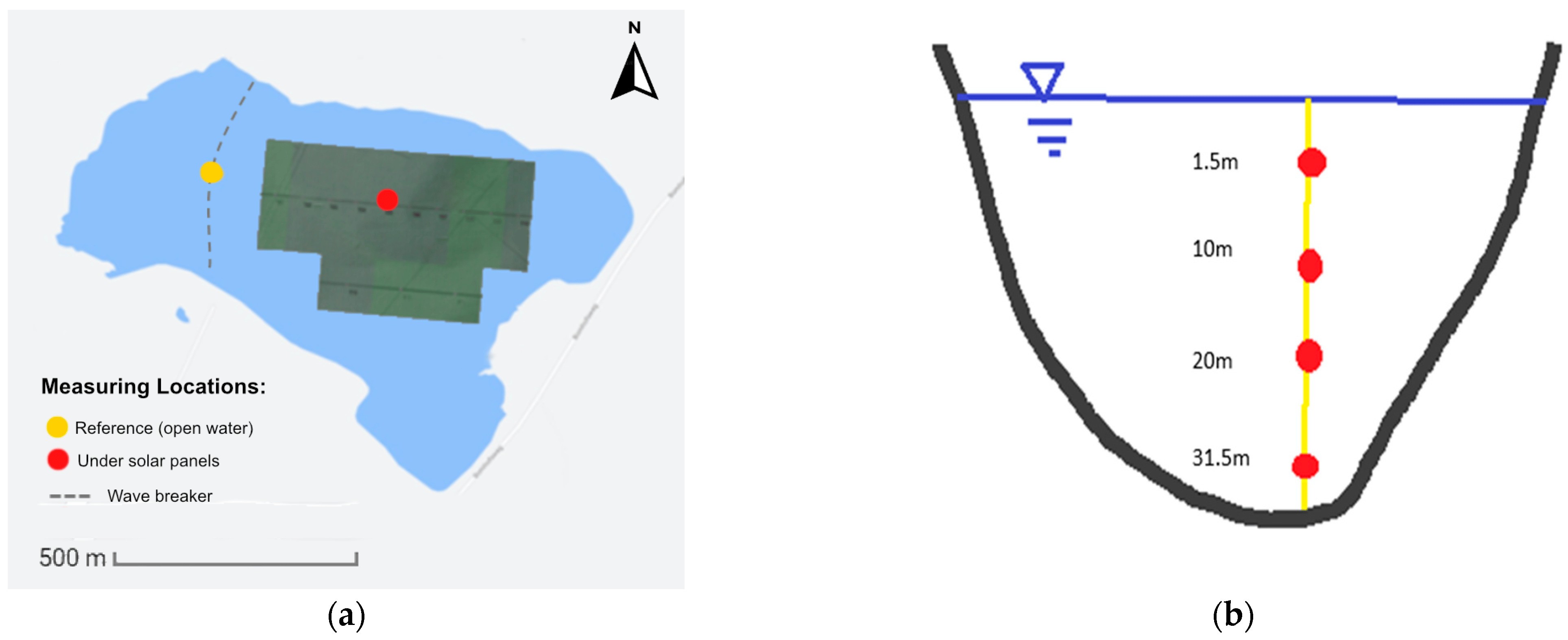
Figure 2. (a) Map points indicate the position of sensors and underwater drone dives; at the center of the solar park (red point) and the open water/reference location (yellow point). (b) Vertical schematization of the different sensors positioned at different water depths.
Investigation found negligible differences in temperature balance and stratification behavior between water underneath the solar park and the open water body. Electrical conductivity was similar at both sites, but on average 6.6% higher in open water.
A sudden drop in electrical conductivity at the reference in early September took place, but not under the floating solar panels. The cover of the panels may act as a buffer for sudden weather changes.
Despite fluctuations, DO levels remained healthy throughout monitoring. They stayed above a minimum concentration of 6.48mg/L and a saturation of 65.87%. The minimum DO in water should be between 3-4mg/L for living organisms.[36]
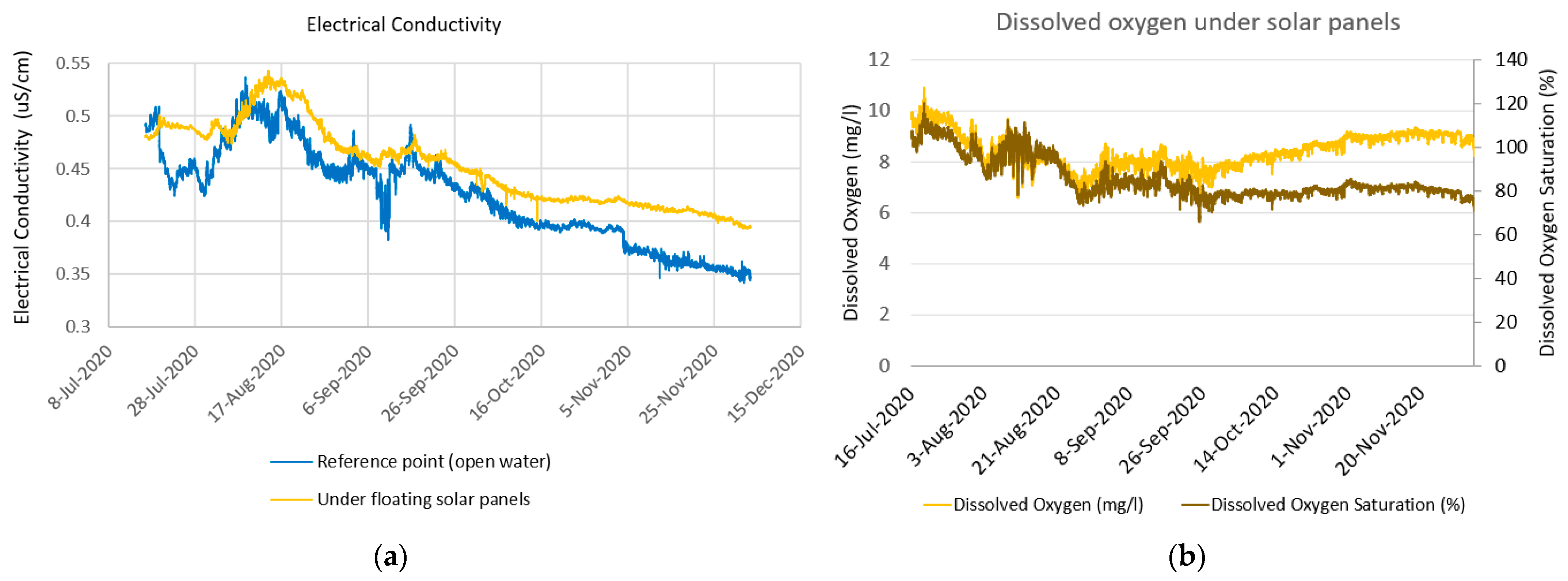
Figure 3.Water quality data between July and December 2020: (a) comparison between electrical conductivity at the reference point and under the solar park and (b) DO levels (concentration and saturation) under floating solar panels.
The temperature and conductivity values show very small differences, on average temperature was 3.3% higher beneath FPV. Electrical conductivity was 0.03mS/cm lower at open water. FPV has a minor effect on temperature balance, conductivity, and stratification behavior.[35]
Deltares, 2022: Testing water quality at Beilen
• Location: Beilen, Netherlands • FPV lake coverage: 48% (lake size 20ha) • Installed capacity: 15.9MWp
Deltares is an independent knowledge institute for water and the subsurface. Between 2021-2022, they monitored this project for oxygen levels, water temperature, and water transparency at different depths and locations.
Results showed the water quality did not differ between open water and underneath the solar park. In July, initial measurements at four depths prompted the decision to shift to measurements per meter to capture the jump layer.
In September, a perceptible jump layer was observed, from approximately 3m to 7/8m. As autumn unfolded, this jump layer vanished, with no detectable difference in temperature between the open water and water beneath FPV.
In January and March, the water exhibited complete mixing, resulting in minimal temperature differences over depth. On March 30, 2022, the jump layer re-emerged, extending from about 2-4m. Again, there was no temperature disparity between FPV and open water.
Findings suggest that despite the seasonal fluctuations in the jump layer, water temperature stayed consistent beneath the solar farm and in open water.
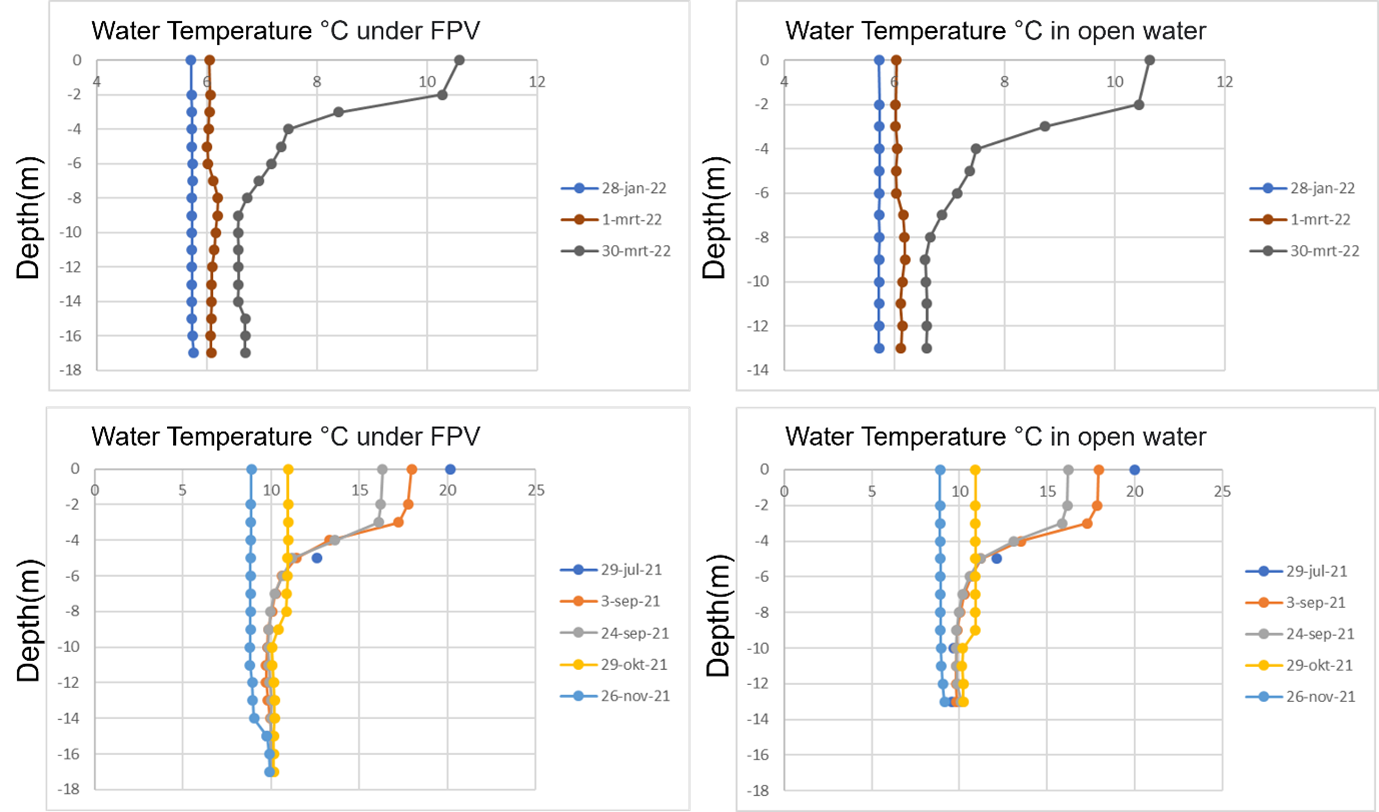
Figure 4. Water temperature at different depth in open water and under solar park.
Enviso, 2023: Continuous monitoring at Lippe Gabrielsplas
• Location: Lippe Gabrielsplas, Netherlands • FPV lake coverage: 35% (lake size: 23 ha) • Installed capacity: 13.7MWp
Engineering firm Enviso assessed this site between 2022-2023, again comparing open water to water beneath FPV modules. During warm months, a slight temperature difference of 0.5-1°C was observed in the upper water layer. This was potentially linked to shading from the solar farm.
However, no significant differences in DO levels were noted in the upper layer, or at a depth of 8-9m. Results showed no noticeable difference between measurements of open water and those under solar panels.
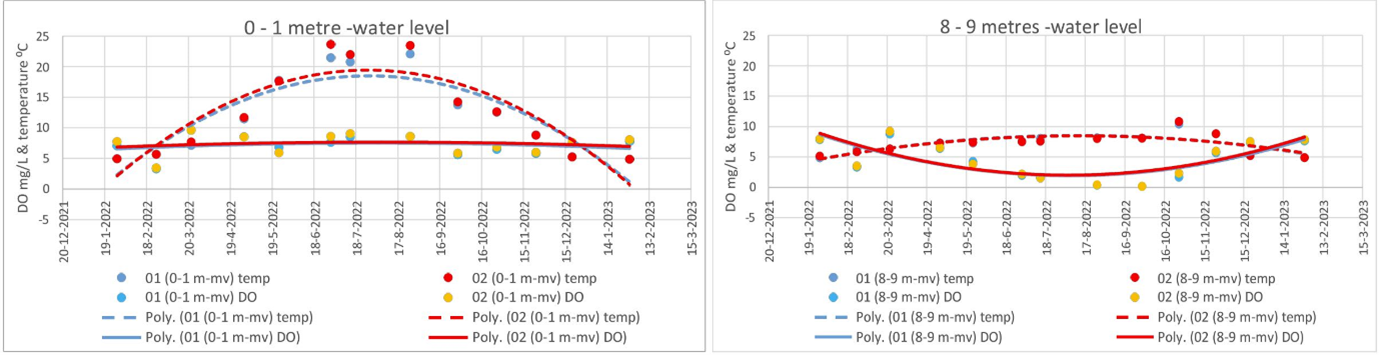
Figure 5.Measured water temperature and oxygen at different depth under solar park (01) and in open water (02)
Yang et al, 2022: Theoretical modelling in Singapore
• Location: Tengeh Reservoir, Singapore • Size: 42ha • FPV lake coverage: 30%
Outside of the borders of the EU, this study[37] analyzed how a hypothetical installation would affect water temperature and water quality parameters in a shallow tropical reservoir.
A three-dimensional hydrodynamic-ecological lake model was used, alongside field measurements to examine the effects on water quality. A 1ha demonstration and 6m2 mockup FPV system were installed in Tengeh Reservoir to analyze changes in water quality under the panel compared to open water conditions.
The findings showed lower DO levels under the solar panels (7.97mg/L) than in the open water (8.48mg/L), but still within the acceptable range for living organisms. A slight increase in pH by 0.5 and surface water temperature by 0.5 °C was observed under the demonstration panels.