Growing evidence for floating solar technology
The International Energy Agency (IEA) maintains that the global energy sector can still reach net zero CO₂ emissions by 2050.[1] To combat climate change and satisfy rising demand for renewable energy, we need solutions that maximize efficiency and reduce land use.
Floating photovoltaic (FPV) systems, which deploy solar panels on water bodies, are a promising part of the solution.[2] A 2007 pilot was realized in Japan, with the first commercial system built in 2008 in California[3]. According to S&P global, FPV reached an estimated installed capacity of 4.3GWp by 2022. Of that, Asia accounted for an 87% market share.[4]
Various studies have estimated FPV’s potential.[5][6] According to the World Bank, it could generate 400GWp using 1% of global surface water.[5] If ~10% of Europe’s freshwater reservoirs accommodated FPV, estimated capacity would near 200GWp.[5] Another study[6] calculated FPV systems could generate ~10% of US electricity consumption using 27% of available water bodies.
Why invest in the future of FPV?
Floating-PV can provide several advantages and opportunities for unlocking more surface for development of renewable energy projects, especially in regions with scarce land resources where land is expensive, or where land is unsuitable for traditional PV[6].
Installation is simplified, with less site preparation and faster construction[3].
Several studies suggest a beneficial effect on energy yield, due to water’s cooling effect lowering modules’ operating temperature and increasing efficiency.[7][8]
More monitoring from operational experience will accurately quantify the exact difference in energy yield across different climatic conditions[8][9].
Depending on system design, FPV has been shown to reduce evaporation losses, potentially saving water in arid areas. Shading from panels can improve water quality by reducing algae[10].
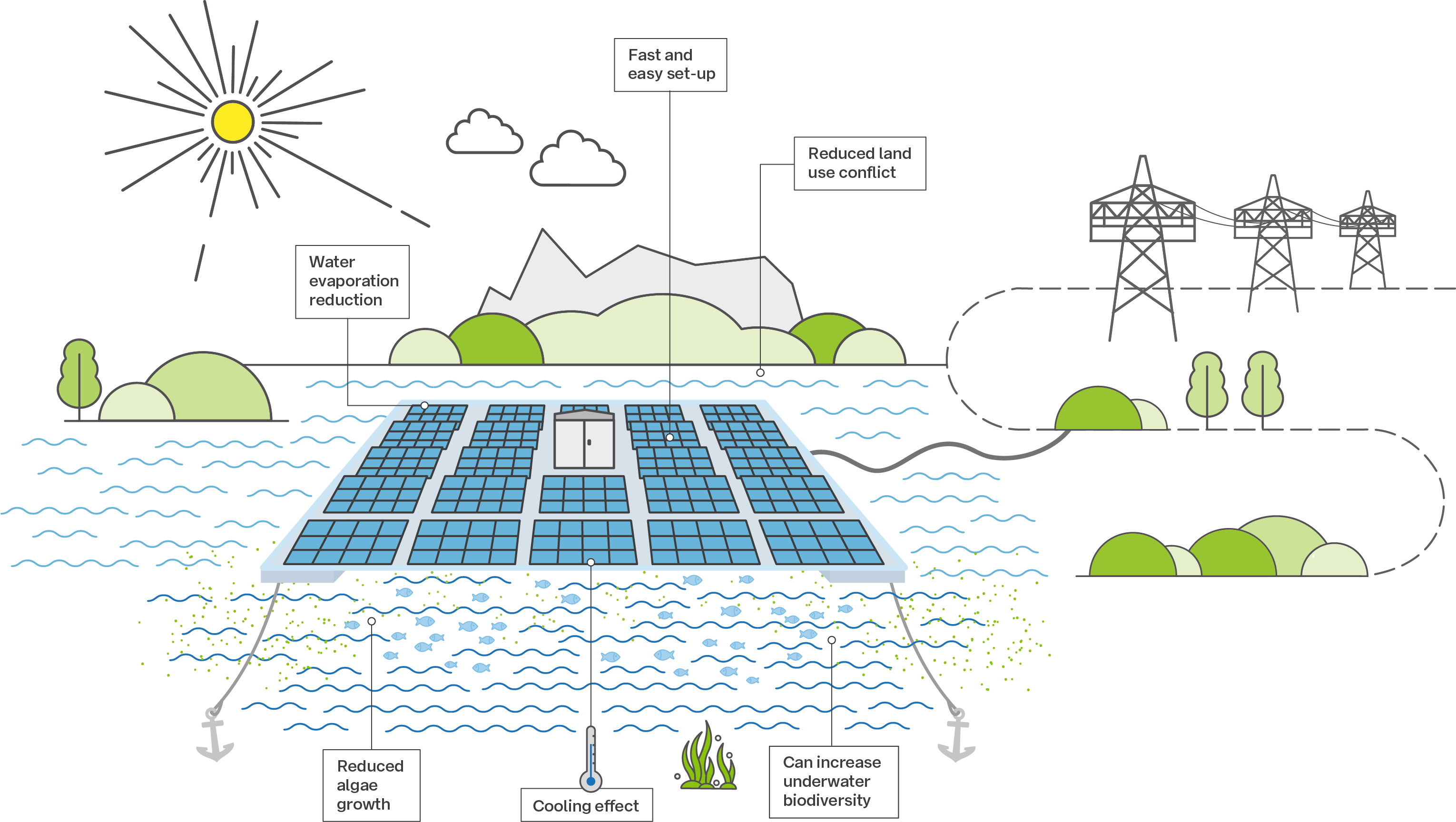
Figure 1. Overview of the benefits of Floating PV
However, uncertainty about consequences for water quality and overall ecology hampers the spread of FPV projects, especially in Europe. Social acceptance also plays an important role. Greater public knowledge of FPV’s positive environmental impact is key to expansion.
This whitepaper synthesizes findings from various studies. It provides both a review of results from literature, as well as from studies on BayWa r.e.’s operational plants during the past five years. These include lessons learnt on design, compensation and enhancement measures, operational practices, and monitoring.
We’ll include a summary of this impact, and examine case studies on projects of varying scales around the world:
